For most people, a pillow is simply a soft place to rest their head. Yet the relationship between pillow design, sleeping posture, and personal comfort is more complex than it first appears.
The neck supports the head throughout the day, adapting to movements, posture changes, and everyday activities. During sleep, the muscles have an opportunity to rest, but the position of the head and neck still matters.
This has encouraged growing interest in ergonomic pillows, particularly those designed to provide more specific support to the cervical region.
Among the newer approaches are cervical traction-inspired pillows, contoured support systems, and designs combining different materials within a single sleeping surface.
Understanding how these products differ can help consumers make more informed choices.
Why Ordinary Pillows Do Not Work Equally Well for Everyone
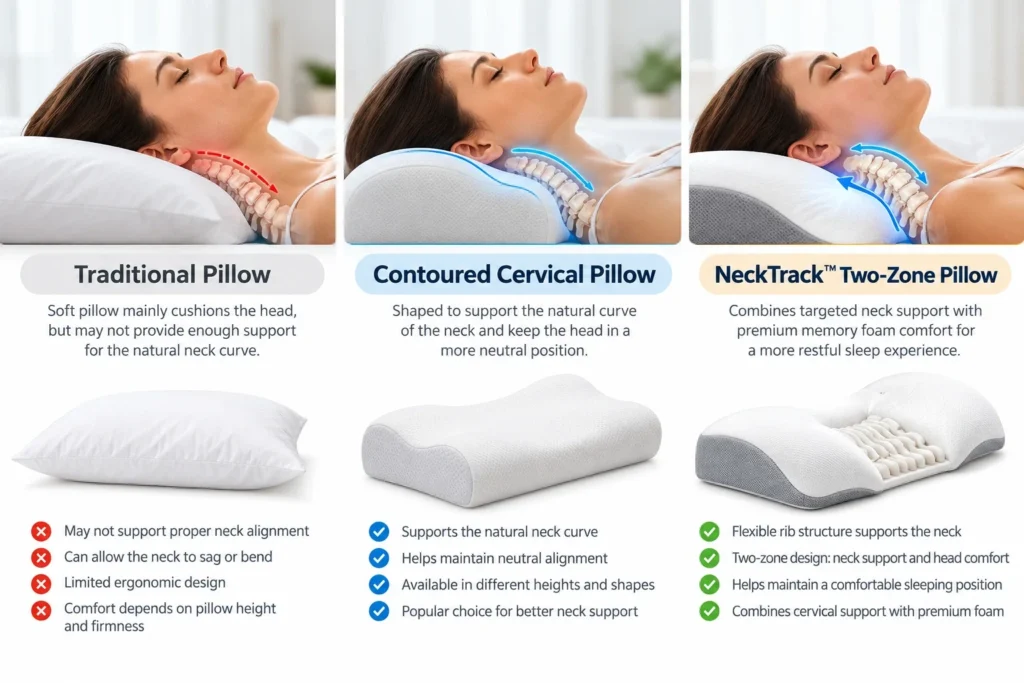
Traditional pillows are generally designed to provide cushioning rather than accommodate specific anatomical requirements.
A pillow that feels comfortable to one person may be unsuitable for another because of differences in shoulder width, body proportions, mattress firmness, and sleeping habits.
For example, someone who sleeps on their side may require enough pillow height to fill the space between the head and mattress. A back sleeper may prefer a lower profile that supports the neck without excessively elevating the head.
Even small differences in pillow height or firmness can change the position in which the head rests.
This is one reason why there is no universally perfect pillow.
The most suitable choice depends on individual comfort, sleeping position, and the ability of the pillow to provide consistent support.
A pillow is only one part of your sleep setup. Light, temperature, and noise matter too, as our guide to the best bedroom environment for sleep explains.
The Growing Interest in Cervical Support Pillows
Cervical support pillows differ from conventional rectangular pillows through their shape, construction, or internal support features.
Some incorporate curved contours that accommodate the neck. Others use recessed head areas, varying foam densities, or specially designed support sections.
The objective is usually to provide a comfortable resting position while accommodating the natural curvature of the cervical spine.
Certain products are marketed as cervical traction pillows because their construction is intended to create a gentle stretching sensation or a particular type of neck support.
However, a distinction is important: a pillow described as traction-inspired should not automatically be considered a medical traction device.
Clinical cervical traction involves controlled therapeutic forces. Consumer pillows generally serve a different purpose, and any medical benefits require appropriate supporting evidence.
For everyday use, comfort, fit, and appropriate support remain the most relevant considerations.
How Modern Materials Influence Pillow Performance
The evolution of ergonomic pillows has been closely connected with developments in foam technology.
Memory foam is widely used because it responds gradually to pressure and conforms to the contours of the body.
Conventional polyurethane foam offers manufacturers flexibility in firmness, density, and structural characteristics.
Some pillows combine these materials to create different support sensations in different areas.
A softer section may accommodate the head, while a more structured region may support the neck.
The performance of these materials depends on their specific formulation, dimensions, and construction.
Importantly, higher density does not necessarily mean greater comfort or better ergonomic suitability.
Consumers should evaluate the complete design rather than relying on a single material specification.
A Different Approach: Multi-Zone Pillow Construction
One of the more interesting developments in pillow design is the use of separate functional zones.
Instead of constructing an entire pillow from one uniform material, designers can create areas with different purposes.
A multi-zone pillow may incorporate a shaped cervical support section alongside a softer resting surface.
This approach recognizes that the head and neck have different anatomical characteristics and may respond differently to cushioning.
For example, a neck-support zone might use a structured foam configuration, while the headrest incorporates conforming memory foam.
The result is a design intended to balance targeted support with everyday sleeping comfort.
Whether a particular configuration works well depends on individual preferences and how the pillow is used.
Where Cervical Traction-Inspired Designs Fit In
Traction-inspired pillow designs represent one variation of the broader ergonomic pillow category.
Some use flexible ribs, curved structures, or other features intended to provide a distinct support sensation beneath the cervical region.
These designs reflect an effort to move beyond conventional cushioning and explore how support can be distributed across different parts of the pillow.
One example is the NeckTrack cervical support pillow concept, which combines a specialized neck-support zone with a separate memory foam sleeping area.
The design illustrates how product developers are experimenting with multiple support functions in a single pillow.
As with any innovative consumer wellness product, the presence of specialized design features does not by itself demonstrate therapeutic effectiveness.
What Consumers Should Look for When Choosing a Pillow
The growing number of ergonomic pillow designs gives consumers more choices, but it can also make comparisons difficult.
Several practical considerations can help narrow the options.
Sleeping position: Side, back, and stomach sleepers generally have different pillow-height requirements.
Support and firmness: The pillow should provide a comfortable balance between cushioning and stability.
Dimensions: Height, width, and contour shape should suit the user’s body proportions and mattress.
Materials: Foam characteristics, cover fabrics, breathability, and durability can influence the overall experience.
Adaptability: People who frequently change positions during sleep may prefer designs that accommodate movement.
Product information: Clear specifications, realistic descriptions, and reasonable return policies can help consumers evaluate unfamiliar designs.
No single feature guarantees a better sleeping experience. The combination of fit, comfort, and personal preference is what matters most.
Understanding the Difference Between Comfort and Medical Treatment
Marketing language surrounding cervical pillows sometimes includes references to spinal decompression, nerve pressure, or treatment of chronic neck conditions.
Consumers should approach these claims carefully.
A pillow may provide comfortable support or change the resting position of the head and neck, but that does not establish that it treats a specific medical condition.
Individuals experiencing persistent neck pain, radiating discomfort, numbness, weakness, or other neurological symptoms should seek appropriate medical advice.
An ergonomic pillow can be considered part of a comfortable sleeping environment, not a substitute for professional diagnosis or treatment.
The Future of Ergonomic Sleep Products
The pillow industry continues to explore new shapes, materials, and construction methods.
Rather than focusing exclusively on softness, manufacturers are increasingly considering how different sections of a pillow interact with the head and neck.
Multi-zone structures, flexible support elements, and combinations of foam materials offer additional possibilities for product development.
At the same time, successful innovation requires more than an unusual design. Products must remain comfortable, practical, durable, and appropriate for their intended users.
For consumers, understanding the basic principles of ergonomic pillow design can be more useful than relying on promotional terminology alone.
Final Thoughts
A pillow may appear to be a simple household product, but its shape, height, and construction can influence the comfort of a sleeping position.
Cervical support pillows and traction-inspired designs offer alternatives to conventional cushioning by introducing more specialized support features.
These innovations deserve attention as examples of evolving ergonomic product design, while their individual benefits should be evaluated realistically.
Ultimately, the best pillow is not necessarily the most technologically complicated one. It is the one that provides comfortable, appropriate support for the person using it.
For more ways to rest better, see our tips to improve sleep quality naturally.

Alexander Vulfov has more than 26 years of experience in the health and wellness industry, with a focus on ergonomic product development, manufacturing, and distribution. His work includes the development of comfort-oriented products such as Lumbarest and NeckTrack.