
Real-Life Context
There was a time when I focused only on sleep timing.
I thought if I went to bed early enough, sleep quality would automatically improve.
But I started noticing something interesting.
Even when I slept at the right time, my sleep did not always feel equally refreshing.
Some nights felt deep and uninterrupted.
Other nights felt light, restless, or inconsistent—even when I slept the same number of hours.
As Daniel Hart, I began paying attention to something I had ignored before: my sleep environment.
That shift changed how I understood sleep completely.
Instead of looking only at “how long I sleep,” I started observing “where and how I sleep.”
That is where I first understood the importance of sleep environment factors.
What Are Sleep Environment Factors?
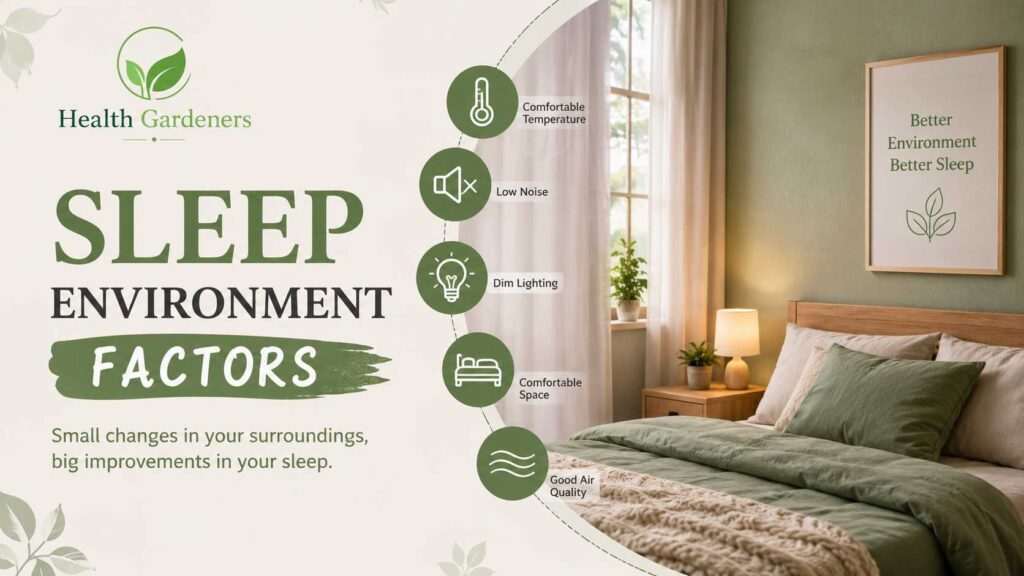
Sleep environment factors are the physical conditions in your bedroom that influence how well you sleep.
These include:
- Light exposure
- Noise levels
- Room temperature
- Air quality
- Bedding comfort
- Screen exposure before sleep
Each of these factors can influence how easily your body transitions into sleep and how deeply you stay asleep during the night.
Sleep is not only a biological process.
It is also strongly influenced by environmental signals.
Why Environment Matters for Sleep Quality
Your body follows a natural internal rhythm called the circadian rhythm.
This rhythm responds to external signals such as light, darkness, and temperature.
That means your environment sends signals to your brain about whether it is time to stay awake or go to sleep.
When these signals are consistent and aligned, sleep becomes easier.
When they are disrupted, sleep quality may become irregular.
This is why even small environmental changes can affect sleep more than people realize.
Lighting Effects on Sleep
One of the strongest sleep environment factors is light exposure.
Light tells your brain whether it is daytime or nighttime.
Blue Light Effect on Sleep
Blue light is commonly emitted from phones, laptops, and LED screens.
Research on the effect of blue light on sleep suggests that evening exposure may interfere with natural sleep signals by affecting melatonin timing.
This does not mean blue light is harmful in general.
It simply means timing matters.
When blue light exposure happens close to bedtime, it may delay the natural wind-down process.
From my personal observation, late-night screen exposure often made it harder to feel mentally ready for sleep.
Effects of Sleeping With Lights On
Sleeping with lights on can affect sleep depth for some individuals.
Light exposure during sleep may reduce the brain’s ability to fully transition into deeper rest phases.
Common reported effects include:
- Lighter sleep quality
- More frequent waking
- Less morning freshness
Even small light sources, such as LEDs or device lights, can influence sleep sensitivity in some cases.
Red Light and Sleep
Red light is often considered less disruptive compared to other light types.
Some discussions suggest that red light may have a lower impact on sleep signals compared to blue or bright white light.
However, individual responses can still vary.
The key idea is that dim and warm lighting is generally more sleep-friendly than bright or stimulating light.
Room Temperature and Sleep Quality
Another major sleep environment factor is temperature.
Your body naturally lowers its core temperature before sleep.
A cooler room often supports this process.
If the room is too warm or too cold, it may become harder to stay asleep comfortably.
From experience, I noticed that temperature consistency mattered more than exact numbers.
Sudden temperature changes during the night often affected sleep continuity.
Noise and Sleep Impact
Noise is one of the most underestimated sleep disruptors.
Even when you do not fully wake up, noise can interrupt deeper sleep cycles.
Common noise sources include:
- Traffic sounds
- Household activity
- Electronics
- Sudden environmental sounds
In my case, even small irregular noises sometimes made sleep feel lighter the next morning.
This shows that sleep is not always about awareness of waking up—it is also about sleep depth.
Bedroom Setup for Sleep
Your bedroom setup plays a direct role in sleep quality.
A well-designed sleep space supports relaxation signals.
A poor setup can keep your brain in a semi-alert state.
Key elements include:
- Comfortable mattress and pillow support
- Minimal light exposure
- Reduced noise distractions
- Clean and organized space
- Balanced airflow
A simple environment often supports more consistent sleep.
Digital Devices and Sleep Environment
Modern bedrooms often include screens.
Phones, TVs, and laptops can introduce both light and mental stimulation.
Even when not actively used, devices in the bedroom can influence behavior patterns.
From my experience, keeping the bedroom more “sleep-focused” helped reduce mental activation before bed.
Effects of LED Lights on Sleep
LED lights are energy-efficient but often bright and cool-toned.
Depending on intensity and timing, they may affect sleep signals.
Bright LED lighting in the evening can reduce the natural transition toward rest.
Dimmed or warm lighting is generally more sleep-supportive in nighttime settings.
Effects of Light on Circadian Rhythm
Light is one of the strongest signals that regulates your circadian rhythm.
Your body uses light exposure to determine:
- When to feel awake
- When to release sleep hormones
- When to enter deep rest phases
This is why evening lighting habits can influence sleep timing.
Even small changes in lighting can shift how quickly your body prepares for sleep.
Green Light and Sleep
Green light effects on sleep are still being explored in research.
Some findings suggest it may have different impacts compared to blue or white light.
However, the most consistent factor across studies is still overall brightness and timing of exposure.
Lower brightness in the evening generally supports better sleep readiness.
Effects of Sleeping With Light On
Sleeping with lights on can vary in impact depending on sensitivity.
Some people may not notice strong effects, while others may experience lighter sleep.
Possible outcomes include:
- Reduced sleep depth
- More frequent waking
- Less consistent sleep cycles
This is highly individual, but environment control often improves sleep consistency.
Best Bedroom Setup for Sleep
Based on experience and general sleep science principles, a supportive sleep environment often includes:
- Low lighting in the evening
- Comfortable room temperature
- Minimal noise exposure
- Clean, calm bedroom space
- Reduced screen use before sleep
- Consistent sleep timing
The goal is not perfection.
The goal is consistency in signals your body recognizes as “rest time.”
How Environment and Sleep Work Together
Sleep is not an isolated process.
It is influenced by both internal biology and external surroundings.
Even if your sleep schedule is correct, a disruptive environment can still reduce sleep quality.
This is why environmental factors matter as much as sleep duration.
Practical Observations From Real Life
From my personal experience, I noticed three clear patterns:
- A quiet room improved sleep depth
- Lower evening light made it easier to fall asleep
- Consistent room temperature improved morning freshness
These were not dramatic changes.
But they were consistent enough to notice over time.
Important Note
This article is based on personal experience and general wellness information. It is not medical advice. Sleep responses vary from person to person, and individuals with ongoing sleep concerns should consult a qualified professional.
FAQs
What are sleep environment factors?
Sleep environment factors include light, noise, temperature, air quality, and bedroom setup that influence sleep quality.
Does blue light affect sleep?
Blue light exposure in the evening may affect natural sleep timing by influencing the body’s sleep signals.
Is sleeping with lights on bad?
Sleeping with lights on may reduce sleep depth for some people, but individual responses can vary.
What is the best bedroom setup for sleep?
A calm, dark, quiet, and cool bedroom setup generally supports better sleep quality.
Does room temperature affect sleep quality?
Yes, temperature can influence how easily the body falls asleep and stays asleep.
How does noise affect sleep?
Noise can interrupt sleep cycles and reduce sleep depth even if you do not fully wake up.
What is the effect of blue light on sleep?
Blue light exposure may influence melatonin timing and delay natural sleep readiness when used at night.
Final Thoughts
Your bedroom environment quietly shapes your sleep quality every night.
From lighting and temperature to noise and screen exposure, each factor sends signals to your body about rest and alertness.
When these signals are aligned, sleep becomes more stable and natural.
When they are disrupted, sleep may feel lighter or less refreshing.
Understanding sleep environment factors is not about perfection.
It is about creating conditions that support your body’s natural sleep rhythm over time.

Is a wellness-focused writer who shares practical lifestyle habits and experience-based wellness insights related to nutrition, sleep, stress management, and daily routines. He is not a medical professional and does not provide medical advice. Read More