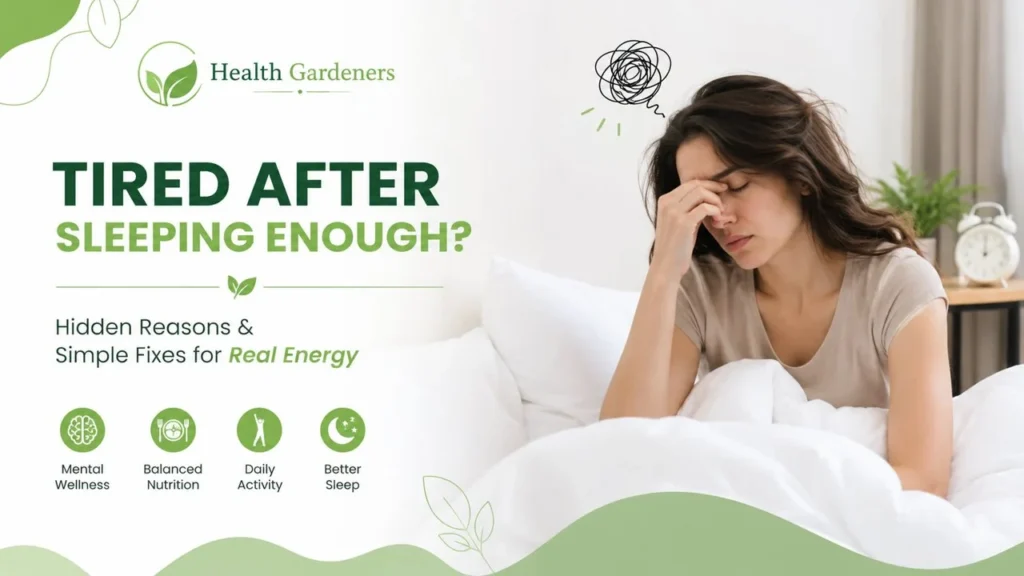
If you feel tired after sleeping enough, the most common reasons are poor sleep quality, an irregular sleep schedule, late caffeine or alcohol, stress, and too little physical activity. Less often, ongoing tiredness is a sign of a sleep disorder or a health condition such as anaemia, a thyroid problem, or diabetes. This guide covers 10 possible causes, a simple way to track your sleep, and the signs that mean you should see a doctor.
Key Takeaways
- Hours in bed do not guarantee good sleep. Interrupted sleep can leave you tired even after 8 hours.
- Grogginess in the first 30 to 60 minutes after waking is normal and is called sleep inertia.
- Caffeine can affect sleep for up to 8 hours.
- Loud snoring or gasping during sleep with daytime tiredness can be a sign of sleep apnea.
- See a doctor if you have been tired for a few weeks and do not know why.
First, Are You Really Sleeping Enough?
The CDC recommends 7 or more hours of sleep a night for adults aged 18 to 60. That is a minimum, and time in bed is not the same as time asleep. If you go to bed at 11 p.m., take 30 minutes to fall asleep, and wake several times, you may be getting much less than you think.
Sleep you miss during the week also adds up. Our article on sleep debt explains how small shortfalls build over time.
Tiredness and Sleepiness Are Not the Same
The U.S. National Library of Medicine’s MedlinePlus separates two feelings that people often mix up. Drowsiness is the need to sleep. Fatigue is a lack of energy and motivation. Knowing which one you have helps you and your doctor find the cause. If you could fall asleep at any moment, sleep itself is the likely problem. If you feel drained but not sleepy, the cause may lie elsewhere.
10 Reasons You Feel Tired After Sleeping Enough
1. Your Sleep Quality Is Poor
The CDC describes quality sleep as uninterrupted and refreshing. It lists three signs of poor sleep quality: trouble falling asleep, waking repeatedly during the night, and feeling sleepy or tired even after getting enough sleep. Noise, light, an uncomfortable room, and pain can all break up sleep without you fully remembering it.
What to do: Follow the steps in our guide on how to improve sleep quality naturally.
2. Your Sleep Schedule Is Irregular
The National Heart, Lung, and Blood Institute (NHLBI) advises keeping the same sleep schedule on weeknights and weekends, with a difference of no more than about an hour. Staying up late and sleeping in can disrupt your body clock’s sleep-wake rhythm, which can leave you tired on Monday even after a long weekend lie-in.
What to do: Set one wake-up time for all seven days. Learn how your body clock works.
3. You Are Experiencing Sleep Inertia
Feeling groggy straight after waking does not mean your sleep was bad. Training material from the CDC’s National Institute for Occupational Safety and Health describes sleep inertia as a temporary drop in performance and mood after waking. It typically lasts 30 to 60 minutes and can last longer when you are sleep deprived.
What to do: Judge your energy an hour or two after waking, not in the first few minutes. Daylight and movement help, as described in our healthy morning routine.
4. Caffeine Is Still in Your System at Bedtime
NHLBI notes that the effects of caffeine can last up to 8 hours, so a late-afternoon coffee can make it hard to fall asleep. You may still sleep, but less soundly.
What to do: Have your last coffee, tea, or cola about 8 hours before bed.
5. You Drink Alcohol or Eat a Heavy Meal Close to Bedtime
NHLBI advises avoiding alcoholic drinks before bed and avoiding heavy or large meals within a few hours of bedtime. A light snack is fine.
What to do: Finish dinner a few hours before bed and keep evenings alcohol-free on nights when you need good rest.
6. You Use Screens or Bright Lights Late at Night
NHLBI recommends avoiding bright artificial light, such as from a TV or computer screen, in the hour before bed because the light may signal your brain that it is time to be awake. The American Academy of Sleep Medicine advises turning off electronic devices at least 30 minutes before bedtime.
What to do: Set a screen cut-off time. Read more on how screen time affects sleep.
7. Your Bedroom Is Disturbing Your Sleep
NHLBI recommends keeping your bedroom quiet, cool, and dark. A warm room, street noise, or early morning light can wake you briefly many times a night.
What to do: See our guide on how your bedroom environment affects sleep.
8. You Are Not Active Enough or Your Diet Is Poor
The UK’s National Health Service (NHS) lists an unhealthy lifestyle, such as an unhealthy diet and not getting much exercise, among the common causes of tiredness. NHLBI also recommends being physically active and spending time outside every day for better sleep.
What to do: Add a daily walk and regular balanced meals. If you feel sleepy after eating, read why your energy drops after eating certain foods.
9. Stress or Low Mood Is Draining You
The NHS names stress, depression, and difficult life events, such as bereavement or caring for a new baby, as common causes of tiredness. MedlinePlus also lists depression and grief among the possible causes of fatigue. This kind of tiredness often does not improve with more sleep.
What to do: A calm night routine can help with everyday stress. If you have felt low or anxious for more than a couple of weeks, speak to a doctor.
10. You May Have a Sleep Disorder or Health Condition
Sometimes tiredness has a medical cause that no habit will fix.
Sleep apnea. According to NHLBI, sleep apnea is a common condition in which breathing stops and restarts many times during sleep. People often do not know they have it. NHLBI suggests talking to a healthcare provider if someone tells you that you snore or gasp for air during sleep, or if you have excessive daytime sleepiness.
Insomnia. NHLBI defines chronic insomnia as trouble sleeping on 3 or more nights a week for more than 3 months.
Other health conditions. The NHS lists several conditions that can cause tiredness, along with other symptoms that may appear with them:
- Iron deficiency anaemia: lack of energy, shortness of breath, noticeable heartbeats, and pale skin
- Diabetes: feeling very thirsty, urinating more often, especially at night, and weight loss
- Overactive thyroid: feeling nervous or irritable, difficulty staying still, and muscle weakness
- ME/CFS (chronic fatigue syndrome): extreme fatigue for at least 3 months, with problems with memory and concentration
The NHS also notes that hormonal changes, such as pregnancy and the menopause, and illnesses such as COVID-19 can cause tiredness.
Medicines. MedlinePlus states that some medicines can cause drowsiness or fatigue, including antihistamines for allergies, blood pressure medicines, sleeping pills, steroids, and water pills. Do not stop or change any medicine without talking to your doctor first.
These lists are for awareness only. Only a healthcare professional can tell you what is causing your tiredness.
Quick Check: What Might Be Behind Your Tiredness?
| What you notice | Worth looking at |
|---|---|
| Groggy for the first hour, fine afterwards | Sleep inertia, which is normal |
| Worst on Mondays or after late nights | Irregular sleep schedule |
| Hard to fall asleep, restless nights | Late caffeine, screens, stress, or bedroom conditions |
| Waking many times in the night | Noise, light, temperature, alcohol, or a sleep disorder |
| Loud snoring or gasping, very sleepy in the day | Possible sleep apnea. See a doctor |
| Drained for weeks along with other symptoms | Possible health condition. See a doctor |
Keep a Sleep Diary for Two Weeks
A sleep diary helps you spot patterns, and it is useful to bring to a doctor’s appointment. The CDC suggests recording when you:
- go to bed
- wake up during the night
- wake up in the morning
- take naps
- exercise
- drink alcohol or caffeinated drinks
- take medications
Add a short note each day about how rested you felt. After two weeks, look for links, such as worse mornings after late coffee or late nights.
When to See a Doctor
The NHS advises seeing a doctor if:
- you have been feeling tired for a few weeks and are not sure why
- your tiredness affects your daily life
- you feel tired and have other symptoms, such as weight loss or mood changes
- you have been told you make gasping, snorting, or choking noises in your sleep
MedlinePlus advises contacting a healthcare provider right away if fatigue comes with confusion or dizziness, blurred vision, little or no urine, recent swelling and weight gain, or thoughts of harming yourself. If you have thoughts of harming yourself, contact your local emergency services or a crisis line immediately.
A doctor may ask about your sleep and lifestyle and may order blood tests. The NHS notes that these can check for anaemia, diabetes, and thyroid problems.
Frequently Asked Questions
Why am I still tired after 8 hours of sleep?
The most likely reasons are interrupted or poor quality sleep, an irregular schedule, late caffeine or alcohol, and stress. If tiredness lasts for a few weeks without a clear reason, see a doctor to rule out a sleep disorder or health condition.
Is it normal to feel tired when I first wake up?
Yes. Grogginess after waking is called sleep inertia. It typically lasts 30 to 60 minutes and can last longer if you have not had enough sleep.
Can you sleep too much?
Needing far more sleep than usual and still feeling unrefreshed can be a sign that something is affecting your sleep quality or your health. Mention it to a doctor if it continues.
Will more coffee fix my tiredness?
Caffeine can make you feel more alert for a while, but it does not treat the cause. MedlinePlus states that stimulants, including caffeine, are not effective treatments for fatigue, and caffeine taken late in the day can make your sleep worse.
What medical conditions cause tiredness even after sleeping?
Conditions listed by the NHS and MedlinePlus include sleep apnea, insomnia, iron deficiency anaemia, diabetes, thyroid problems, depression, and ME/CFS. A doctor can test for these.
How do I know if I have sleep apnea?
Common signs are loud snoring, gasping or choking sounds during sleep, and strong sleepiness during the day. Only a healthcare provider can diagnose it, often with a sleep study.
The Bottom Line
Feeling tired after sleeping enough usually comes down to the quality and timing of your sleep, along with caffeine, alcohol, stress, and activity levels. Fix your schedule, adjust your evenings, and track your sleep for two weeks. If you are still tired and cannot explain why, see a doctor.
Sources
- Centers for Disease Control and Prevention. About Sleep.
- MedlinePlus, U.S. National Library of Medicine. Fatigue.
- National Heart, Lung, and Blood Institute. Healthy Sleep Habits.
- CDC National Institute for Occupational Safety and Health. Sleep Inertia.
- American Academy of Sleep Medicine. Healthy Sleep Habits.
- National Health Service (UK). Tiredness and fatigue.
- National Heart, Lung, and Blood Institute. What Is Sleep Apnea?
- National Heart, Lung, and Blood Institute. What Is Insomnia?
This article is for general information only and is not medical advice. It cannot diagnose any condition. Read our full Disclaimer.

The Health Gardeners Team researches and writes practical wellness content on sleep, nutrition, energy, and daily habits. Our articles are based on published research and guidance from reputable health organizations, and we review and update them regularly. We are not medical professionals, and our content is for general information only. It is not a substitute for advice from a qualified healthcare provider. Learn more about us.