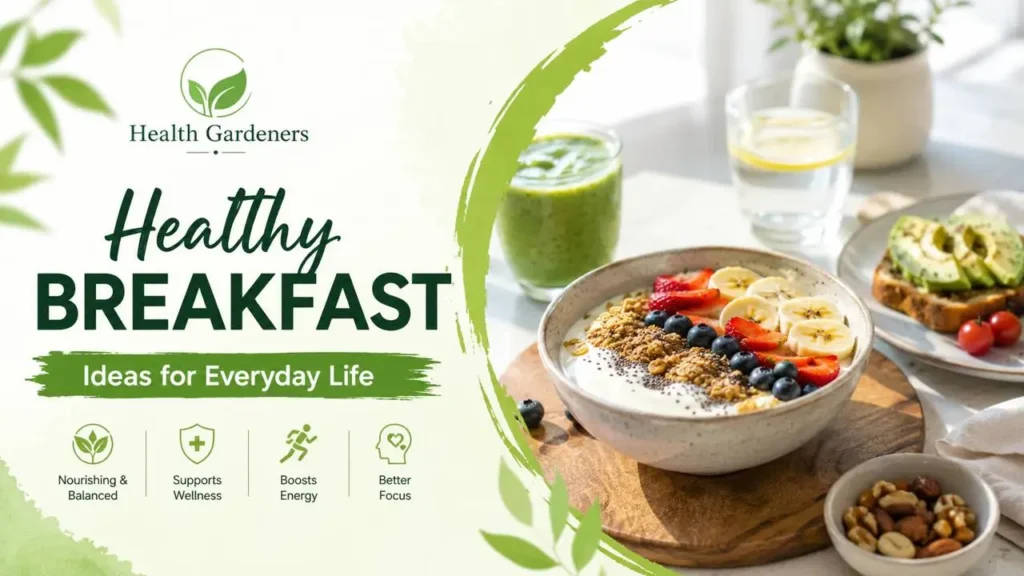
A healthy breakfast combines a whole grain, a source of protein, and at least one portion of fruit or vegetables, with little added sugar. Good examples are porridge with fruit and nuts, eggs on whole grain toast with tomato, and plain yogurt with berries. Below are 15 healthy breakfast ideas that take 2 to 15 minutes, sorted by how much time you have, followed by a 7-day plan and meal prep tips.
Key Takeaways
- Build breakfast from three parts: whole grain, protein, and fruit or vegetables.
- One medium banana, apple, or orange counts as one of your five daily portions of fruit and vegetables.
- Juice and smoothies count as only one portion a day, and the NHS advises a limit of 150 ml.
- Hard-boiled eggs keep for up to 1 week in the fridge, which makes them useful for meal prep.
- Choose plain yogurt, oats, and low-sugar cereals over sweetened versions.
What Makes a Breakfast Healthy?
The World Health Organization (WHO) describes a healthy diet as one based on a variety of minimally processed foods that are low in unhealthy fats, free sugars, and salt. You can apply that to breakfast with a simple three-part formula.
1. A Whole Grain
WHO advises that carbohydrates should come mainly from whole grains, vegetables, fruits, and pulses. Oats, whole wheat bread, and whole grain cereals are easy breakfast choices. They also add fibre. WHO recommends at least 25 g of naturally occurring dietary fibre a day for anyone over 10 years old.
2. A Source of Protein
According to WHO, a protein intake of 10 to 15% of daily energy is generally enough for adults. That is roughly 50 to 75 g a day for someone eating about 2,000 calories. Protein can come from both animal and plant foods. At breakfast, that means eggs, plain yogurt, milk, nuts, seeds, beans, lentils, or chickpeas.
3. Fruit or Vegetables
WHO recommends at least 400 g of fruit and vegetables a day. The UK’s National Health Service (NHS) explains that this equals five portions of 80 g each. Adding one or two portions at breakfast makes the daily target much easier to reach.
The NHS portion guide gives these examples of one portion:
- 1 medium fruit, such as a banana, apple, pear, or orange
- 7 strawberries or 2 kiwi fruit
- 2 handfuls of frozen blueberries
- 1 medium tomato or 7 cherry tomatoes
- 2 heaped tablespoons of cooked spinach
- 3 heaped tablespoons of baked beans or chickpeas
- About 1 heaped tablespoon (30 g) of raisins
15 Healthy Breakfast Ideas at a Glance
| Breakfast | Time | Protein from | Good for |
|---|---|---|---|
| 1. Yogurt bowl with fruit and nuts | 2 min | Yogurt, nuts | Egg-free, no cooking |
| 2. Peanut butter and banana toast | 3 min | Peanut butter | Egg-free, kids |
| 3. Overnight oats | 5 min the night before | Milk or yogurt, seeds | Meal prep, on the go |
| 4. Whole grain cereal with milk and fruit | 2 min | Milk | No cooking |
| 5. Cottage cheese toast with tomato | 3 min | Cottage cheese | Egg-free, savoury |
| 6. Porridge with fruit and seeds | 7 min | Milk, seeds | Cold mornings |
| 7. Scrambled eggs on toast with tomato | 8 min | Eggs | High protein |
| 8. Vegetable omelette | 10 min | Eggs | High protein |
| 9. Beans on whole grain toast | 5 min | Beans | Egg-free, high fibre |
| 10. Chickpea flour pancake with vegetables | 12 min | Chickpea flour | Egg-free, high protein |
| 11. Boiled eggs with fruit | 1 min if prepped | Eggs | On the go, meal prep |
| 12. Fruit and yogurt smoothie | 4 min | Yogurt or milk | On the go |
| 13. Egg and spinach wrap | 8 min | Eggs | On the go |
| 14. Banana and a handful of nuts | 1 min | Nuts | On the go, no prep |
| 15. Lentils or chickpeas with whole wheat flatbread | 5 min with leftovers | Lentils, chickpeas | Egg-free, savoury |
Quick Breakfast Ideas (5 Minutes or Less)
1. Yogurt Bowl With Fruit and Nuts
Spoon plain yogurt into a bowl, add a portion of fruit such as berries or a sliced banana, and top with a small handful of nuts or seeds. Choose plain yogurt, because flavoured yogurts often contain added sugar.
2. Peanut Butter and Banana Toast
Spread peanut butter on a slice of whole grain toast and add a sliced banana. One medium banana counts as one portion of fruit. Look for peanut butter with no added sugar.
3. Overnight Oats
Mix oats with milk or yogurt in a jar, add a spoonful of seeds, and leave it in the fridge overnight. In the morning, top with fresh or frozen fruit. It needs no cooking and travels well.
4. Whole Grain Cereal With Milk and Fruit
Pick a whole grain cereal with little or no added sugar, such as wheat biscuits or unsweetened muesli. Add milk and a portion of fruit. Check the label, because many breakfast cereals are high in sugar.
5. Cottage Cheese Toast With Tomato
Top whole grain toast with cottage cheese, sliced tomato, and cucumber. One medium tomato counts as a vegetable portion. This is a good savoury choice if you do not eat eggs.
Cooked Breakfast Ideas (5 to 15 Minutes)
6. Porridge With Fruit and Seeds
Cook oats with milk or water, then add fruit and a spoonful of seeds or chopped nuts. Sweeten with fruit, such as mashed banana or raisins, instead of sugar or syrup.
7. Scrambled Eggs on Whole Grain Toast With Tomato
Scramble two eggs and serve on whole grain toast with grilled or fresh tomato. The U.S. Food and Drug Administration (FDA) advises cooking eggs until both the yolk and white are firm, and says scrambled eggs should not be runny.
8. Vegetable Omelette
Add spinach, onion, peppers, mushrooms, or tomato to a two-egg omelette. It is an easy way to get a vegetable portion early in the day.
9. Beans on Whole Grain Toast
Warm some baked beans and serve on whole grain toast. Three heaped tablespoons of beans count as one of your five daily portions. Choose a tin with reduced sugar and salt where possible.
10. Chickpea Flour Pancake With Vegetables
Whisk chickpea flour with water, chopped onion, tomato, and herbs, then cook it in a lightly oiled pan like a pancake. It is a savoury, egg-free breakfast made from pulses.
Healthy Breakfast Ideas on the Go
11. Boiled Eggs With Fruit
Take two hard-boiled eggs and an apple or orange. Boil a batch of eggs once a week so they are ready to grab.
12. Fruit and Yogurt Smoothie
Blend a banana or berries with plain yogurt or milk and a spoonful of oats. Keep the serving small. The NHS advises limiting fruit juice and smoothies to a combined total of 150 ml a day, because blending fruit releases its sugars, which can damage teeth. However much you drink, juice and smoothies count as only one portion.
13. Egg and Spinach Wrap
Fill a whole wheat wrap with scrambled egg and a handful of spinach, then roll it up. It is easy to eat on the way to work.
14. Banana and a Handful of Nuts
When you have no time at all, a banana and a small handful of unsalted nuts is better than a pastry. Keep nuts in your bag or desk.
15. Lentils or Chickpeas With Whole Wheat Flatbread
Leftover lentils or chickpeas from dinner make a filling savoury breakfast with a whole wheat flatbread or toast. Pulses are a plant source of protein and fibre.
High-Protein Breakfast Ideas Without Eggs
If you do not eat eggs, these ideas from the list above give you protein from other foods:
- Yogurt bowl with fruit and nuts (idea 1)
- Peanut butter and banana toast (idea 2)
- Cottage cheese toast with tomato (idea 5)
- Beans on whole grain toast (idea 9)
- Chickpea flour pancake (idea 10)
- Lentils or chickpeas with flatbread (idea 15)
A Simple 7-Day Healthy Breakfast Plan
| Day | Breakfast |
|---|---|
| Monday | Overnight oats with berries |
| Tuesday | Scrambled eggs on whole grain toast with tomato |
| Wednesday | Yogurt bowl with banana and nuts |
| Thursday | Beans on whole grain toast |
| Friday | Porridge with apple and seeds |
| Saturday | Vegetable omelette |
| Sunday | Chickpea flour pancake with vegetables |
Breakfast Meal Prep Tips
- Boil eggs in a batch. The FDA says hard-cooked eggs, in the shell or peeled, should be used within 1 week of cooking.
- Keep your fridge cold enough. The FDA recommends 40°F (about 4°C) or below.
- Do not leave cooked eggs out. The FDA advises never leaving cooked eggs or egg dishes out of the fridge for more than 2 hours, or 1 hour in hot weather above 90°F (32°C).
- Prepare overnight oats the evening before and keep them in the fridge.
- Use frozen fruit. The NHS confirms that frozen fruit counts toward your five daily portions, and it saves washing and chopping.
- Chop omelette vegetables in advance and store them in a covered container in the fridge.
What to Limit at Breakfast
- Sugary cereals, pastries, and sweet spreads. WHO recommends keeping free sugars below 10% of daily energy, which is about 50 g or 12 level teaspoons for someone eating 2,000 calories.
- Fruit juice. WHO notes that most fruit juices, including those with no added sugar, contain significant amounts of free sugars. Whole fruit is the better choice.
- Processed meats. WHO lists bacon, ham, and salami among the processed foods that add a lot of salt to the diet. It recommends less than 5 g of salt a day for adults.
- Fried and baked snack foods. WHO advises limiting baked and fried foods and pre-packaged snacks such as doughnuts, biscuits, and pies.
For more on this, read how processed food affects your daily health.
Frequently Asked Questions
What is the healthiest breakfast to eat every day?
There is no single healthiest breakfast. A good everyday breakfast has a whole grain, a protein food, and fruit or vegetables. Porridge with fruit and nuts, or eggs on whole grain toast with tomato, both fit this pattern.
What is a quick healthy breakfast?
Plain yogurt with fruit and nuts, peanut butter and banana toast, and whole grain cereal with milk and fruit all take under 5 minutes.
What can I eat for a high-protein breakfast without eggs?
Try plain yogurt with nuts, cottage cheese on toast, beans on toast, peanut butter toast, or a chickpea flour pancake.
Are smoothies a healthy breakfast?
A small smoothie made with whole fruit and plain yogurt can be part of a healthy breakfast. Keep it to about 150 ml a day, as the NHS advises, and eat whole fruit for your other portions.
Is it bad to skip breakfast?
Some people prefer to eat later in the morning. What matters most is the quality of your diet across the whole day. If you skip breakfast, make sure your first meal still includes whole grains, protein, and fruit or vegetables.
What is a good breakfast for weight management?
No breakfast causes weight loss by itself. Meals with protein and fibre, such as eggs with vegetables or oats with fruit, tend to be filling. For personal advice on weight, speak to a doctor or registered dietitian.
What is a healthy breakfast for kids?
The same formula works for children: a whole grain, a protein food, and fruit. Porridge with banana, egg on toast, or yogurt with berries are simple options. The NHS notes that a child’s portion of fruit is roughly what fits in the palm of their hand.
The Bottom Line
A healthy breakfast does not need a recipe. Combine a whole grain, a protein food, and a portion of fruit or vegetables, and keep added sugar low. Pick two or three ideas from this list, prepare what you can the night before, and rotate them through the week. For the rest of your morning, see our healthy morning routine, and for more food ideas, read about the best foods for natural energy.
Sources
- World Health Organization. Healthy diet fact sheet.
- National Health Service (UK). 5 A Day portion sizes.
- National Health Service (UK). 5 A Day: what counts?
- U.S. Food and Drug Administration. What You Need to Know About Egg Safety.
This article is for general information only and is not medical or dietary advice. If you have a food allergy, a medical condition, or specific dietary needs, speak to a qualified healthcare professional. Read our full Disclaimer.
The Health Gardeners Team researches and writes practical wellness content on sleep, nutrition, energy, and daily habits. Our articles are based on published research and guidance from reputable health organizations, and we review and update them regularly. We are not medical professionals, and our content is for general information only. It is not a substitute for advice from a qualified healthcare provider. Learn more about us.