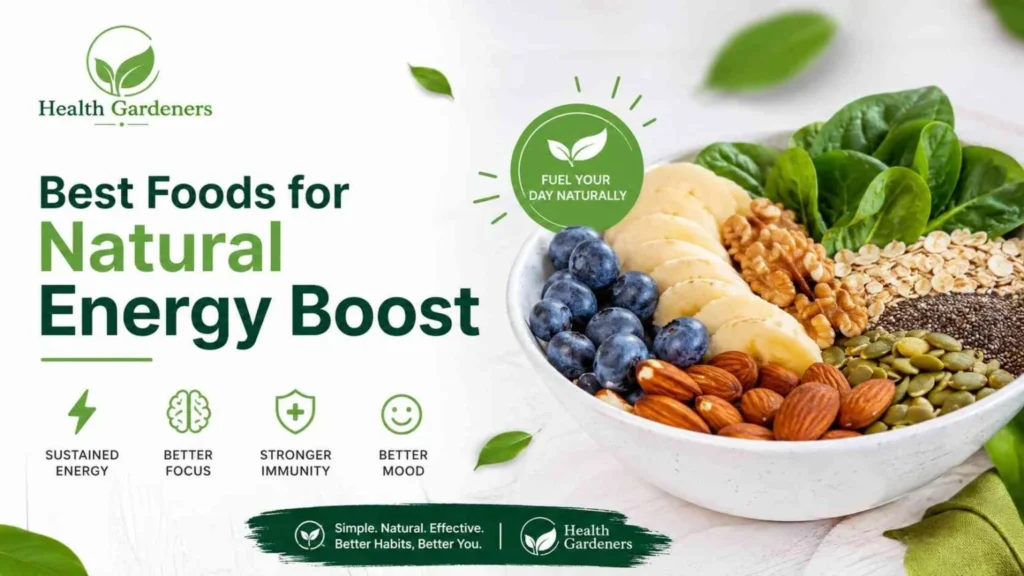
The best foods for energy are whole grains such as oats and brown rice, fruit, beans and lentils, eggs, plain yogurt, nuts, and potatoes eaten with their skins. These foods provide carbohydrates that are digested slowly, along with protein, fibre, iron, and B vitamins. How you eat matters as much as what you eat: regular meals every 3 to 4 hours and enough water help keep your energy steady. This guide lists 12 foods, explains why each one helps, and shows what a day of eating for energy looks like.
Key Takeaways
- Carbohydrates are the body’s main source of energy. Whole grain and high-fibre types are digested more slowly.
- B vitamins, found in grains, help release energy from the food you eat.
- A lack of iron can lead to iron deficiency anaemia, which causes tiredness.
- The NHS advises eating regular meals and healthy snacks every 3 to 4 hours to keep energy up.
- Mild dehydration can make you feel tired, so drink water through the day.
How Food Gives You Energy
Your body turns food into fuel. According to the World Health Organization (WHO), carbohydrates provide the body’s primary energy source, and they should come mainly from whole grains, vegetables, fruits, and pulses.
The type of carbohydrate makes a difference. The UK’s National Health Service (NHS) explains that we digest whole grain foods more slowly than refined grains, so they help us feel full for longer, and that higher-fibre cereals can provide a slow release of energy. Protein and healthy fats do not give a quick burst, but they make meals more filling.
Three nutrients are worth knowing about:
- Fibre. WHO recommends at least 25 g of naturally occurring fibre a day for anyone over 10.
- B vitamins. The NHS notes that B vitamins help release energy from the food you eat.
- Iron. Iron is needed to make red blood cells, which carry oxygen around the body.
12 Best Foods for Energy at a Glance
| Food | What it provides | Easy way to eat it |
|---|---|---|
| 1. Oats | Whole grain carbohydrate, fibre | Porridge with fruit |
| 2. Whole grain bread, brown rice, wholewheat pasta | Slowly digested carbohydrate, B vitamins, fibre | As the base of lunch or dinner |
| 3. Potatoes with skin | Carbohydrate, fibre, B vitamins, potassium | Baked or boiled |
| 4. Bananas and other fruit | Carbohydrate, fibre | As a snack or with breakfast |
| 5. Beans, lentils, and chickpeas | Carbohydrate, protein, fibre, iron | In soups, salads, and curries |
| 6. Eggs | Protein | Boiled, scrambled, or in an omelette |
| 7. Plain yogurt and milk | Protein | With fruit and oats |
| 8. Nuts and seeds | Unsaturated fat, protein, iron | A small unsalted handful |
| 9. Dried fruit | Carbohydrate, iron | A spoonful with a meal |
| 10. Fish, chicken, and lean meat | Protein, iron in red meat | With vegetables and a whole grain |
| 11. Vegetables | Fibre, vitamins, minerals | Half your plate at main meals |
| 12. Water | Hydration | A glass with each meal |
The 12 Best Foods for Energy
1. Oats
Oats are a whole grain, and WHO lists them among the grains that carbohydrates should come from. The NHS describes porridge and other oat-based cereals as healthy breakfast options and notes that higher-fibre cereals can provide a slow release of energy. Choose plain oats and add your own fruit, since flavoured instant varieties often contain added sugar.
2. Whole Grain Bread, Brown Rice, and Wholewheat Pasta
The NHS advises that starchy foods should make up just over a third of what you eat and recommends choosing whole grain varieties where you can. Whole grain breads provide energy along with B vitamins, fibre, and a range of minerals. Because whole grains are digested more slowly than refined grains, they help you feel full for longer.
3. Potatoes With Their Skins
According to the NHS, potatoes are a good source of energy, fibre, B vitamins, and potassium. They are a healthy choice when boiled, baked, or mashed with only a little fat and no added salt. Leave the skin on to keep more of the fibre and vitamins. Chips and fries cooked in oil are not the same thing.
4. Bananas and Other Fruit
Fruit supplies carbohydrate with fibre, and it needs no preparation. WHO recommends at least 400 g of fruit and vegetables a day. A banana, apple, or orange is an easy snack between meals. Choose whole fruit over juice, because WHO notes that most fruit juices contain significant amounts of free sugars.
5. Beans, Lentils, and Chickpeas
Pulses do several jobs at once. WHO lists them as a recommended source of carbohydrate and as a plant source of protein. The NHS lists beans, such as red kidney beans and chickpeas, among good sources of iron. Add them to soups, salads, rice dishes, and curries.
6. Eggs
Eggs are a convenient source of protein. WHO states that protein can come from a mix of animal and plant sources and that 10 to 15% of daily energy from protein is generally enough for adults. Adding an egg to a meal based on whole grains makes it more filling.
7. Plain Yogurt and Milk
Yogurt and milk add protein to breakfast and snacks. The NHS suggests whole oats with fruit and low-fat, lower-sugar yogurt as a breakfast. Pick plain versions and sweeten them with fruit.
8. Nuts and Seeds
WHO names nuts as a source of unsaturated fat, which it recommends over saturated fat. The NHS also lists nuts as a good source of iron. A small handful of unsalted nuts is an easy snack to carry. Nuts are high in calories, so keep the portion modest.
9. Dried Fruit
The NHS includes dried fruit, such as dried apricots, among good sources of iron. A portion is about 30 g, roughly a heaped tablespoon of raisins. Dried fruit is high in sugar and can stick to teeth, so the NHS advises eating it with meals instead of as a snack between them.
10. Fish, Chicken, and Lean Meat
These are protein foods, and red meat is one of the iron sources listed by the NHS. UK health advice is to limit red and processed meat because of a probable link with bowel cancer, so vary your protein with fish, chicken, eggs, and pulses.
11. Vegetables
Vegetables supply fibre, vitamins, and minerals with few calories, and they count toward the 400 g of fruit and vegetables WHO recommends each day. Filling half your plate with vegetables also keeps meals from becoming too heavy, which helps you avoid feeling sluggish afterwards.
12. Water
Water is not a food, but it belongs on this list. The NHS points out that sometimes you feel tired simply because you are mildly dehydrated. Its hydration guidance suggests 6 to 8 cups or glasses of fluid a day as a general guide, and more if you are active, pregnant, or in hot weather.
How to Eat for Steady Energy
Eat Every 3 to 4 Hours
The NHS advises that a good way to keep up your energy through the day is to eat regular meals and healthy snacks every 3 to 4 hours, instead of a large meal less often.
Combine Food Groups
Build each meal from a whole grain or other starchy food, a protein food, and vegetables or fruit. For example, brown rice with lentils and vegetables, or whole grain toast with egg and tomato.
Watch Your Caffeine
Caffeine can make you feel more awake. The NHS warns that it can also disrupt your sleep and lead to daytime tiredness. Its effects can last up to 7 hours, so avoid it in the evening if you have trouble sleeping.
Go Easy on Sugar
WHO recommends keeping free sugars below 10% of daily energy intake. Sweets, sugary drinks, and pastries are easy to overeat and do not keep you full. Read more about why energy drops after eating certain foods.
Limit Alcohol in the Evening
The NHS notes that you sleep less deeply after drinking alcohol, so you may be tired the next day even after a full 8 hours in bed.
A Sample Day of Eating for Energy
| Time | What to eat |
|---|---|
| 7:30 a.m. Breakfast | Porridge with banana and a spoonful of nuts, plus a glass of water |
| 10:30 a.m. Snack | An apple and plain yogurt |
| 1:00 p.m. Lunch | Brown rice with lentils or chicken and plenty of vegetables |
| 4:00 p.m. Snack | Whole grain toast with peanut butter, or a small handful of nuts |
| 7:00 p.m. Dinner | Baked potato with beans or fish and a side salad |
For more morning options, see our healthy breakfast ideas.
Iron and Energy
The NHS explains that a lack of iron can lead to iron deficiency anaemia. Its guidance on tiredness lists lack of energy, shortness of breath, noticeable heartbeats, and pale skin as signs that can appear with this condition.
The NHS gives these daily iron amounts for adults:
- 8.7 mg for men aged 19 and over
- 14.8 mg for women aged 19 to 49
- 8.7 mg for women aged 50 and over
Good food sources include beans, nuts, dried fruit, fortified breakfast cereals, and red meat. Most people can get enough iron from a varied diet. The NHS warns that too much iron from supplements can be harmful, so speak to a doctor before taking them.
When Food Is Not the Answer
Food supports your energy, but it cannot make up for poor sleep, long-term stress, or a health problem. The NHS states that many cases of tiredness are due to stress, not enough sleep, poor diet, and other lifestyle factors. If your diet is already good, look at your sleep next. Our guides on improving sleep quality naturally and feeling tired after sleeping enough can help.
See a doctor if you have been tired for a few weeks without a clear reason, or if tiredness comes with other symptoms such as weight loss, shortness of breath, or mood changes.
Frequently Asked Questions
What are the best foods for energy?
Whole grains such as oats and brown rice, fruit, beans and lentils, eggs, plain yogurt, nuts, and potatoes with their skins. They provide slowly digested carbohydrate along with protein, fibre, B vitamins, and iron.
What foods give you energy quickly?
Fruit such as a banana provides carbohydrate that is easy to eat on the go. For energy that lasts longer, pair it with a protein food such as yogurt or a handful of nuts.
What should I eat when I feel tired?
Start with a glass of water, since mild dehydration can cause tiredness. Then have a balanced snack such as fruit with yogurt or whole grain toast with peanut butter.
Which foods help you avoid an afternoon slump?
A lunch based on whole grains, protein, and vegetables is more filling than one based on refined carbohydrates and sugar. Eating a snack mid-afternoon also helps, in line with NHS advice to eat every 3 to 4 hours.
Are energy drinks a good way to boost energy?
Energy drinks contain caffeine and often a lot of sugar. Caffeine can disrupt sleep and lead to more tiredness the next day, so water and regular meals are a better everyday approach.
Can low iron make you tired?
Yes. A lack of iron can lead to iron deficiency anaemia, and tiredness is one of its signs. A doctor can check your iron levels with a blood test.
The Bottom Line
No single food boosts your energy on its own. Steady energy comes from regular meals built on whole grains, fruit and vegetables, pulses, and protein foods, along with enough water. Start by swapping one refined food for a whole grain version and adding a mid-afternoon snack. For the bigger picture, see our guide to healthy daily habits.
Sources
- World Health Organization. Healthy diet fact sheet.
- National Health Service (UK). Starchy foods and carbohydrates.
- National Health Service (UK). Vitamins and minerals: Iron.
- National Health Service (UK). Self-help tips to fight tiredness.
- National Health Service (UK). Water, drinks and hydration.
- National Health Service (UK). Tiredness and fatigue.
This article is for general information only and is not medical or dietary advice. If you have a medical condition, a food allergy, or ongoing tiredness, speak to a qualified healthcare professional. Read our full Disclaimer.
The Health Gardeners Team researches and writes practical wellness content on sleep, nutrition, energy, and daily habits. Our articles are based on published research and guidance from reputable health organizations, and we review and update them regularly. We are not medical professionals, and our content is for general information only. It is not a substitute for advice from a qualified healthcare provider. Learn more about us.