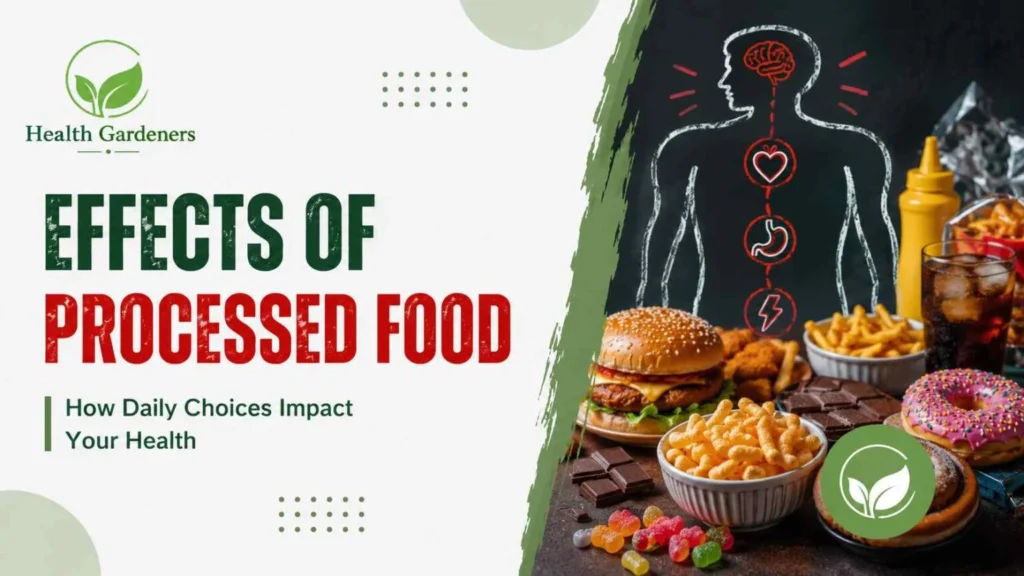
Not all processed food is bad for you, but diets high in ultra-processed foods are linked to weight gain and a higher risk of type 2 diabetes, heart disease, and poorer mental health. Many of these foods are high in calories, salt, sugar, and saturated fat, and in one controlled trial people ate about 500 more calories a day on an ultra-processed diet. This guide explains the types of processed food, what the research shows, what is still uncertain, and how to cut back in a realistic way.
Key Takeaways
- Most food is processed in some way. Frozen vegetables, pasteurised milk, and tinned beans are all processed.
- Ultra-processed foods include sweetened drinks, crisps, packaged cakes and biscuits, sweets, and some ready meals.
- A large research review linked higher intake of ultra-processed food to 32 negative health outcomes.
- Scientists do not yet know whether the harm comes from the processing itself or from the calories, fat, salt, and sugar.
- Reading the label is the simplest way to choose better packaged foods.
What Is Processed Food?
The UK’s National Health Service (NHS) defines a processed food as any food or drink that has been changed in some way when it is made or prepared. By that definition, most of what we eat is processed.
Processing has useful purposes. According to the NHS, it is used to:
- make food safe, such as pasteurising milk to remove harmful bacteria
- make food suitable for use, such as pressing seeds to make oil
- preserve food, as with tinned and frozen foods
- change the taste, for example by adding salt or sweeteners
- create ready meals and snacks
What Are Ultra-Processed Foods?
Ultra-processed foods have been through more processing than other foods. The NHS notes that they often contain ingredients you would not normally have at home, such as preservatives, sweeteners, and emulsifiers. Researchers usually sort foods by processing level using a system called Nova, which has four groups.
| Group | What it means | Examples |
|---|---|---|
| Unprocessed or minimally processed | Whole foods that are fresh, or only cleaned, cut, frozen, dried, or pasteurised | Fruit, vegetables, eggs, plain milk, oats, rice, lentils, fresh meat and fish |
| Processed cooking ingredients | Ingredients taken from whole foods and used in cooking | Oil, butter, sugar, salt |
| Processed foods | Whole foods with salt, sugar, or oil added, usually with only a few ingredients | Tinned vegetables and beans, cheese, freshly baked bread, salted nuts |
| Ultra-processed foods | Industrial products made mostly from extracted or modified ingredients plus additives | Sweetened drinks, crisps, packaged cakes and biscuits, sweets, ice cream, instant noodles, some ready meals |
These foods now make up a large part of many diets. A research review published in The BMJ reports that ultra-processed foods supply about 58% of dietary energy in the United States and 42% in Australia, compared with about 10% in Italy.
How Processed Food Affects Your Health
1. It Can Lead You to Eat More
The clearest evidence comes from a controlled trial by the U.S. National Institutes of Health (NIH). Twenty healthy adults lived at a research centre for a month. They spent two weeks on an ultra-processed diet and two weeks on a minimally processed diet, in random order. The meals offered had the same amounts of calories, sugar, fibre, fat, and carbohydrates, and people could eat as much or as little as they wanted.
On the ultra-processed diet, people ate about 500 more calories a day. They also ate faster and gained about 0.9 kg (2 pounds) on average. On the minimally processed diet, they lost about the same amount.
This was a small, short study, and the researchers noted that small differences in protein between the diets might explain up to half of the difference in calorie intake.
2. It Is Linked to Long-Term Health Problems
The BMJ review combined 45 pooled analyses covering almost 9.9 million people. Higher intake of ultra-processed food was linked to a higher risk in 32 of the 45 health outcomes studied. The evidence was strongest for:
- death from cardiovascular disease, with about a 50% higher risk in people with the highest intake
- type 2 diabetes, with a 12% higher risk for each 10% increase in ultra-processed food intake
- anxiety and other common mental health conditions
The review also found links with obesity, depression, sleep problems, and death from any cause. The NHS likewise states that diets high in ultra-processed foods have been linked to an increased risk of obesity, type 2 diabetes, and heart disease.
These studies are observational. They show that two things occur together, and they cannot prove that one causes the other. The reviewers rated most of the evidence as low or very low quality under a standard grading system, which is common for studies of this type.
3. It Adds Salt, Sugar, and Unhealthy Fat
The World Health Organization (WHO) notes that people are now eating more highly processed foods that are high in unhealthy fats, free sugars, and salt. It explains that in many countries most salt comes from processed foods, such as ready meals, processed meats like bacon, ham, and salami, cheese, and salty snacks.
WHO recommends that adults have less than 5 g of salt a day and keep free sugars below 10% of daily energy intake. A diet built around packaged snacks and ready meals makes both limits hard to meet.
4. It Pushes Out Healthier Foods
When packaged foods fill most of the plate, there is less room for fruit, vegetables, whole grains, and pulses. WHO observes that many people do not eat enough fruit, vegetables, or dietary fibre. The BMJ review also describes ultra-processed foods as typically lower in fibre, vitamins, and minerals.
5. Processed Meat Carries a Specific Risk
The NHS states that eating a lot of processed and red meat is linked with an increased risk of bowel cancer. Processed meats include bacon, ham, sausages, and salami.
What Scientists Still Do Not Know
The NHS is clear on one point: it is not known whether ultra-processed foods are unhealthy because of the processing itself or because of the calories, fat, salt, and sugar they contain. The NIH researchers said the same after their trial. They could not yet say which feature of ultra-processed food led people to eat more.
For everyday choices, this uncertainty changes little. Either way, the practical advice is to eat fewer packaged foods that are high in saturated fat, salt, or sugar.
Not All Processed Foods Are Unhealthy
You do not need to avoid everything in a packet. The NHS says some ultra-processed foods can be part of a healthy diet, and gives these examples:
- wholemeal sliced bread
- wholegrain or higher fibre breakfast cereals
- baked beans
Many other processed foods are useful and nutritious, including frozen vegetables and fruit, tinned beans and fish, plain yogurt, and pasteurised milk. They save time and money and help reduce food waste.
How to Read a Food Label
The label tells you more than the front of the packet does. The NHS guide to food labels gives these figures for judging a food per 100 g:
| Nutrient | High (per 100 g) | Low (per 100 g) |
|---|---|---|
| Total fat | More than 17.5 g | 3 g or less |
| Saturated fat | More than 5 g | 1.5 g or less |
| Sugars | More than 22.5 g | 5 g or less |
| Salt | More than 1.5 g | 0.3 g or less |
These figures apply to food. The NHS notes that different criteria are used for drinks.
Three more label tips from the NHS:
- Check the ingredients order. Ingredients are listed by weight, so the first few make up most of the product.
- Use colour coding where it exists. Red means high, amber means medium, and green means low. Choose more greens and ambers and fewer reds.
- Check the portion size. The manufacturer’s idea of a portion may be smaller than yours.
8 Simple Swaps to Cut Back on Ultra-Processed Food
| Instead of | Try |
|---|---|
| Sweetened fizzy drinks | Water, or water with lemon or mint |
| Sugary breakfast cereal | Porridge oats or a wholegrain cereal with fruit |
| Flavoured yogurt | Plain yogurt with fresh or frozen fruit |
| Crisps | A small handful of unsalted nuts |
| Packaged cakes and biscuits | Fruit, or wholegrain toast with peanut butter |
| Instant noodles | Wholewheat pasta or rice with frozen vegetables and an egg |
| Processed meat in sandwiches | Egg, tinned fish, chicken, or hummus |
| Ready meals most nights | A batch-cooked meal, frozen in portions |
Change one item at a time. For breakfast swaps, see our healthy breakfast ideas, and for snacks, read about the best foods for natural energy.
A Realistic Approach
Cooking from scratch takes time and can cost more. The NIH researchers made this point themselves, noting that telling people to eat healthier may not work without better access to healthy food. A few habits make a difference without requiring a full change of diet:
- Keep frozen vegetables, tinned beans, eggs, and oats in the house as quick basics.
- Cook double portions and freeze half.
- Compare labels when you buy packaged food and pick the one with less salt and sugar.
- Keep sweets, crisps, and sweet drinks as occasional foods.
The NHS sums it up: foods high in saturated fat, salt, or sugar are not needed in the diet, so eat them less often and in smaller amounts. Our guide to healthy daily habits explains how to make small changes last.
Frequently Asked Questions
What are the effects of processed food on health?
Diets high in ultra-processed foods are linked to weight gain and a higher risk of obesity, type 2 diabetes, heart disease, and some mental health conditions. Many of these foods are also high in salt, sugar, and saturated fat.
Are all processed foods unhealthy?
No. Frozen vegetables, tinned beans, plain yogurt, and wholemeal bread are processed and can be part of a healthy diet. The main concern is ultra-processed foods that are high in saturated fat, salt, or sugar.
What is the difference between processed and ultra-processed food?
Processed foods are whole foods with a few added ingredients, such as tinned vegetables or cheese. Ultra-processed foods are industrial products made mostly from extracted ingredients and additives, such as sweetened drinks, crisps, and packaged cakes.
Does processed food cause weight gain?
In an NIH trial, adults ate about 500 more calories a day and gained weight on an ultra-processed diet compared with a minimally processed one. The study was small and lasted two weeks per diet, so more research is needed.
Can processed food make you tired?
Some people feel sluggish after large meals or foods high in added sugar. Our article on why energy drops after eating certain foods covers this in detail.
How can I tell if a food is ultra-processed?
Look at the ingredients list. A long list that includes items you would not keep in your kitchen, such as emulsifiers, sweeteners, flavourings, and preservatives, is a common sign.
How can I reduce processed food in my diet?
Swap one item at a time, keep quick whole foods at home, cook in batches, and use food labels to choose packaged foods lower in salt, sugar, and saturated fat.
The Bottom Line
Processed food is a broad category, and much of it is perfectly fine. The foods to limit are ultra-processed products high in salt, sugar, and saturated fat, which are linked to overeating and to long-term health risks. You do not need to cut them out completely. Read labels, make a few swaps, and base most meals on whole and minimally processed foods.
Sources
- National Health Service (UK). Processed foods.
- Lane MM, et al. Ultra-processed food exposure and adverse health outcomes: umbrella review of epidemiological meta-analyses. The BMJ, 2024.
- National Institutes of Health. NIH study finds heavily processed foods cause overeating and weight gain.
- World Health Organization. Healthy diet fact sheet.
- National Health Service (UK). Food labels.
This article is for general information only and is not medical or dietary advice. If you have a medical condition or specific dietary needs, speak to a qualified healthcare professional. Read our full Disclaimer.

The Health Gardeners Team researches and writes practical wellness content on sleep, nutrition, energy, and daily habits. Our articles are based on published research and guidance from reputable health organizations, and we review and update them regularly. We are not medical professionals, and our content is for general information only. It is not a substitute for advice from a qualified healthcare provider. Learn more about us.