
Real-Life Context
For years, I believed that getting “enough sleep” simply meant spending seven or eight hours in bed.
If I slept that long, I assumed my brain had fully recovered.
But I eventually noticed something that didn’t fit that idea.
Some mornings, I woke up after a full night’s sleep feeling clear, focused, and motivated.
Other mornings, despite sleeping for nearly the same amount of time, my mind felt slow. It was harder to concentrate, remember simple things, or stay productive.
As Daniel Hart, I became curious about what was happening during sleep—not just how long I slept.
That curiosity introduced me to one of the most fascinating parts of sleep science: sleep stages.
I realized that not every hour of sleep does the same job.
Some stages help restore the body.
Others support learning, emotions, creativity, and memory.
Understanding these stages completely changed how I viewed sleep.
Instead of chasing more hours, I started thinking about better-quality sleep.
Why Is Deep Sleep Important?
Deep sleep is one of the main stages of the normal sleep cycle.
During this stage, your brain becomes less responsive to outside stimulation while your body focuses on important recovery processes.
Many researchers describe deep sleep as an important period for physical restoration, while other sleep stages support different types of brain activity.
Rather than competing with each other, every stage has its own purpose.
That is why the question is not simply:
“How many hours did I sleep?”
A better question is:
“Did my brain move naturally through healthy sleep stages?”
Understanding Sleep Stages Explained
One thing I wish I had learned much earlier is that sleep is not one continuous state.
Instead, your brain moves through several repeating stages throughout the night.
Think of sleep as a journey instead of a switch.
Each cycle contains different stages that work together.
Generally, sleep includes:
- Light sleep
- Deep sleep
- REM (Rapid Eye Movement) sleep
These stages repeat several times during the night.
A healthy night’s sleep depends on progressing naturally through these stages rather than staying in only one.
This is why sleep stages explained is such an important topic for anyone interested in improving daily energy.
The Brain Doesn’t “Switch Off”
One of the biggest misconceptions about sleep is that the brain completely shuts down.
It doesn’t.
In reality, your brain remains highly active throughout the night.
Different regions become more or less active depending on the current sleep stage.
Some stages are associated with physical recovery.
Others are linked to dreaming, memory organization, emotional processing, and learning.
Understanding this changed how I viewed sleep forever.
Instead of thinking:
“I’m unconscious.”
I now think:
“My brain is doing overnight maintenance.”
What Happens During Deep Sleep?
Deep sleep is often associated with the body’s most restorative sleep period.
Although researchers continue studying every detail, this stage is commonly linked with:
- Physical recovery
- Muscle repair after daily activity
- Tissue maintenance
- Immune system support
- Energy restoration
From my own experience, mornings after uninterrupted sleep often felt noticeably different.
My body felt lighter.
My thinking felt clearer.
I wasn’t just awake.
I felt refreshed.
Of course, everyone experiences sleep differently, but understanding this connection encouraged me to prioritize sleep quality instead of only sleep duration.
Brain Recovery During Sleep
One topic that fascinated me was brain recovery sleep.
Throughout the day, your brain processes huge amounts of information.
Conversations.
Work.
Stress.
Decisions.
Learning.
Emotions.
Sleep gives your brain time to organize and process much of this information.
Although researchers continue exploring exactly how these processes work, sleep is widely recognized as an essential part of healthy brain function.
Instead of viewing sleep as “doing nothing,” I now see it as one of the busiest parts of the day—for my brain.
REM Sleep Benefits
Many people compare REM sleep with deep sleep as if one must be better.
I used to think the same.
But that isn’t how healthy sleep works.
REM Sleep Supports Different Functions
REM sleep is commonly associated with:
- Dreaming
- Memory processing
- Emotional regulation
- Learning integration
- Creative thinking
Because of these roles, many people search for REM sleep benefits or benefits of REM sleep.
Those are important questions.
But they are often asked the wrong way.
Deep Sleep vs REM: Is One More Important?
This is one of the most searched questions online.
Is REM or deep sleep more important?
The simplest answer is:
Neither is universally “better.”
Each stage contributes something different.
Think about building a house.
The foundation is essential.
The roof is also essential.
One cannot replace the other.
The same idea applies to sleep.
Deep sleep and REM sleep work together as part of a complete sleep cycle.
Removing one stage would not improve the other.
Instead, healthy sleep depends on allowing the brain to move naturally through every stage.
This perspective helped me stop worrying about chasing one specific sleep stage and instead focus on improving my overall sleep routine.
Why Comparing Sleep Stages Can Be Misleading
Many articles create a competition between:
- Deep sleep
- REM sleep
- Light sleep
In reality, the stages cooperate.
Your body naturally changes the amount of each stage throughout the night.
For example:
Earlier sleep cycles often contain relatively more deep sleep.
Later cycles usually include longer REM periods.
This changing balance is normal.
Instead of asking:
“Which stage is best?”
A better question is:
“Is my sleep cycle progressing naturally?”
That small shift in thinking completely changed how I approached sleep.
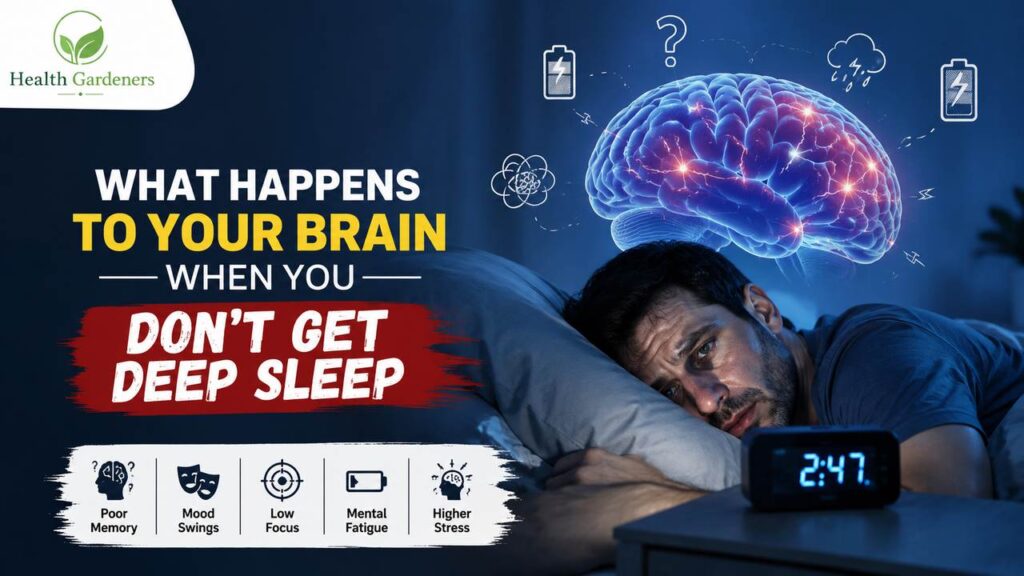
Lack of Deep Sleep Effects
When people search for lack of deep sleep effects, they often expect one simple answer.
But sleep affects many systems at once.
If sleep quality is consistently poor, some people may notice:
- Feeling less refreshed
- Lower daytime alertness
- Reduced concentration
- More mental fatigue
- Lower physical recovery after activity
These experiences vary widely from person to person.
Many other factors—including stress, daily habits, environment, and overall health—can also influence how someone feels during the day.
That is why it is important not to assume that every tired morning is caused only by deep sleep.
A Better Way to Think About Sleep Quality
One concept I wish more websites explained is this:
Sleep quality is cumulative.
One good night helps.
But long-term patterns matter much more.
Instead of asking:
“How much deep sleep did I get yesterday?”
I now think:
“Have my sleep habits supported healthy sleep over the past few weeks?”
That perspective reduced my frustration and encouraged consistency instead of perfection.
Sleep Is a Team Effort
One of the biggest lessons I learned is that sleep stages do not work independently.
Imagine an orchestra.
Every instrument has a different role.
Removing one instrument changes the music.
Sleep works similarly.
Deep sleep supports one set of recovery processes.
REM supports another.
Light sleep connects the transitions between them.
Good sleep depends on all of them working together.
Habits That May Support Healthy Sleep Stages
Although no habit guarantees a specific amount of deep sleep or REM sleep, creating supportive routines may help your body maintain healthier sleep patterns.
Some habits I personally found helpful include:
- Going to bed at a similar time most nights
- Limiting bright screens before bedtime
- Keeping my bedroom cool, dark, and quiet
- Avoiding very heavy meals immediately before bed
- Staying physically active during the day
- Managing evening stress with quiet activities instead of more screen time
These habits did not create instant changes.
Instead, they supported gradual improvements over time.
The Bigger Picture: Sleep Architecture
One topic that many beginner articles overlook is sleep architecture.
Sleep architecture simply refers to the overall structure of your sleep cycles across the night.
Instead of focusing on one stage, researchers often examine how smoothly the brain moves between stages.
This broader view helped me stop obsessing over individual sleep metrics from wearable devices.
Instead, I focused on building habits that supported healthy sleep as a whole.
What I Learned From My Own Journey
Because I developed high blood pressure at a relatively young age, improving my daily habits became very important to me.
Sleep was only one part of that journey.
Over time, I realized that sleep quality connects with many other lifestyle habits:
- Daily movement
- Consistent routines
- Stress management
- Nutrition
- Screen use
- Bedroom environment
Rather than looking for one perfect solution, I began working on small improvements across my entire routine.
That gradual approach felt more realistic and easier to maintain.
Important Note
This article shares my personal experience together with general wellness information about sleep science.
It is intended for educational purposes only and should not be considered medical advice, diagnosis, or treatment.
If you experience ongoing sleep difficulties, persistent daytime fatigue, or concerns about your health, consult a qualified healthcare professional.
Frequently Asked Questions
What is deep sleep?
Deep sleep is one stage of the normal sleep cycle that is commonly associated with physical restoration and recovery.
Why is deep sleep important?
Deep sleep is considered an important part of healthy sleep because it supports several natural recovery processes while you rest.
What are the benefits of REM sleep?
REM sleep is commonly associated with dreaming, memory organization, emotional processing, learning, and creativity.
Is REM sleep more important than deep sleep?
Neither stage is universally more important. Deep sleep and REM sleep perform different functions and both contribute to healthy sleep.
What happens if you don’t get enough deep sleep?
Some people may feel less refreshed, experience lower daytime alertness, or notice reduced concentration. Many factors can influence these experiences, so they should not automatically be attributed to deep sleep alone.
What are the main sleep stages?
A typical sleep cycle includes light sleep, deep sleep, and REM sleep. These stages repeat several times throughout the night.
Can you improve deep sleep naturally?
Healthy sleep habits—such as maintaining a consistent bedtime, creating a comfortable sleep environment, and reducing evening screen exposure—may support overall sleep quality.
Does more deep sleep always mean better sleep?
Not necessarily. Healthy sleep depends on balanced progression through all sleep stages rather than maximizing one stage alone.
Final Thoughts
Before learning about sleep stages, I measured sleep by one number: hours.
Today, I measure it differently.
I think about the quality of my sleep, the consistency of my habits, and whether my body has the opportunity to move naturally through every stage of the sleep cycle.
That mindset has helped me value sleep as an active recovery process rather than simply time spent in bed.
Deep sleep is important, REM sleep is important, and the overall rhythm connecting them matters even more.
Sometimes, improving sleep isn’t about sleeping longer.
It’s about giving your brain the best environment and routine to do what it already knows how to do.

Is a wellness-focused writer who shares practical lifestyle habits and experience-based wellness insights related to nutrition, sleep, stress management, and daily routines. He is not a medical professional and does not provide medical advice. Read More